What to Check Before You Hire a Drone Pilot
Part 107 certification, aircraft registration, Remote ID, insurance, airspace authorisation and image rights — the seven things worth verifying before anyone flies over your property, and how to verify them.
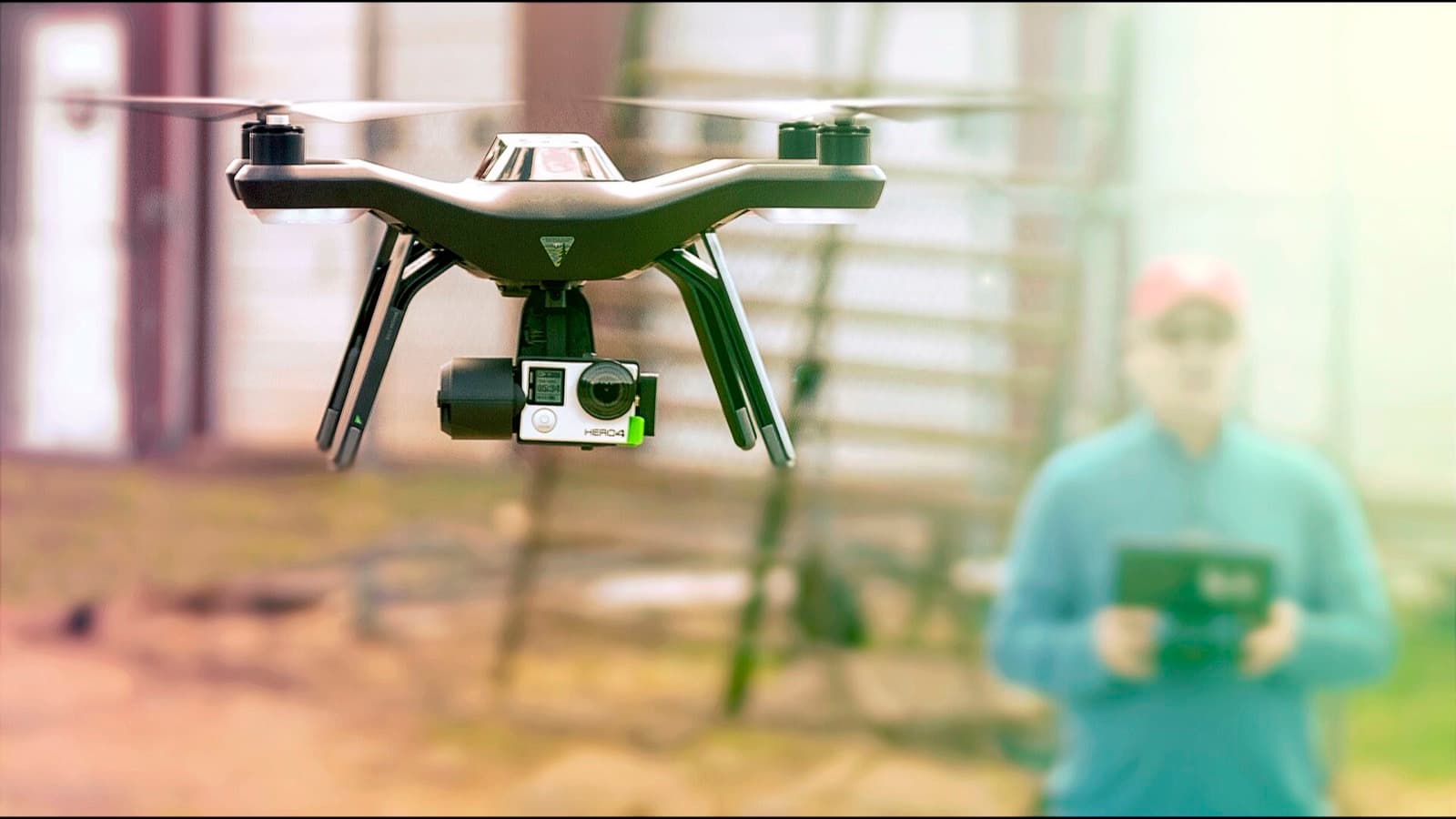
Photo: Bureau of Land Management, public domain.
Anyone flying a drone for money in the United States needs an FAA Part 107 Remote Pilot Certificate. That is not a professional courtesy or an industry badge — it is federal law, it applies to a $20 listing shoot the same as to a pipeline survey, and "my nephew has a drone" is not a legal way to photograph a property you are selling.
Most people hiring a pilot never ask. Here is what is worth checking, why each item matters, and how to actually verify it rather than take someone's word.
1. Part 107 — the one non-negotiable
A Remote Pilot Certificate is earned by passing the FAA's aeronautical knowledge test at an approved testing centre. It covers airspace classification, weather, loading, emergency procedures and the operating rules — the same subject areas a manned pilot studies, scaled to small unmanned aircraft. Holders must complete recurrent training every 24 calendar months to stay current.
What it is not: a quality rating. Part 107 says someone understands the rules and the airspace. It says nothing about whether they can compose a photograph, fly a smooth orbit, or write a useful inspection report. Plenty of certificated pilots are mediocre photographers, and the certificate will not tell you which. It is a floor, not a recommendation.
How to verify it. Ask for the pilot's full name as it appears on the certificate and the certificate number, then look them up in the FAA's public Airmen Inquiry database. One caveat worth knowing: airmen can opt out of the publicly releasable list, so not finding someone is not proof of anything — but finding them settles the question immediately. A pilot who will not give you a number at all has answered a different question.
2. Aircraft registration and Remote ID
The certificate covers the person. The aircraft has its own requirements.
Any drone weighing 250 grams or more must be registered with the FAA, and drones flown commercially under Part 107 are registered individually rather than under a blanket hobbyist registration. Registration is inexpensive and lasts three years, so there is no reasonable excuse for an unregistered working aircraft.
Since 2023, most drones must also broadcast Remote ID — a signal carrying the aircraft's identity and position, either built into the aircraft or added with a broadcast module. It exists so that anyone, including the person whose property is being flown over, can identify an aircraft in the air. A professional operating current equipment will have this handled and will not be surprised by the question.
3. Insurance
Here is the thing most people get backwards: the FAA does not require a drone pilot to carry insurance. Certification and insurance are entirely separate, and a fully legal, fully certificated pilot can be carrying nothing at all.
| Cover | What it is for | Typical |
|---|---|---|
| Liability | Damage to property or injury to people | $1M is the common floor; $2M+ on commercial sites |
| Hull | Damage to the pilot's own aircraft | Their problem, not yours |
| Professional indemnity | Errors in a survey or an inspection report | Expect it on anything you will rely on for a decision |
Ask for a certificate of insurance, not a verbal assurance. For a commercial site, many operators will name you as an additional insured for the job — routine, usually free or close to it, and worth requesting. If a pilot is flying over an occupied building, a public road or anything you do not own outright, this is the item to be firm about.
4. Airspace
Most of the United States is uncontrolled airspace where a certificated pilot can operate up to 400 feet without asking anyone. Near airports it is controlled, and flight there requires an authorisation — usually granted in seconds through LAANC, occasionally needing a manual application that takes days.
There are also standing restrictions that catch people out: stadiums during events, some national security sites, temporary flight restrictions around wildfires, VIP movements and major incidents.
None of this should worry you. What should worry you is a pilot who waves it away. "Airspace is never an issue" is not a reassuring answer — it usually means nobody checked. The right answer sounds like "you are in Class D, I will file for LAANC, it is normally instant but tell me if the date is tight."
If your property is near an airport, mention it when you ask for a quote. It occasionally changes what is possible and, more often, it changes the timing.
5. Flights over people and at night
Two rules worth knowing, because they shape what a pilot can offer:
Over people. Flying a drone directly over people who are not part of the operation is restricted, and which aircraft may do it depends on the category the drone qualifies for. In practice this means an event shoot needs a real plan — flight lines that avoid crowds, or an aircraft and waiver that permit it — rather than hovering above the guests.
At night. Night flight is permitted under Part 107 with anti-collision lighting visible for three statute miles and appropriate training. Twilight and blue-hour shoots are entirely normal for a professional, and they are often the best light for a property. If a pilot tells you night flight is banned outright, their information is several years out of date.
6. Image rights
This one costs people money later. Under US copyright law the photographer owns the images by default. What you are buying is normally a licence to use them for a stated purpose — not the copyright.
Agree in writing:
- What you may use them for. One listing? Any marketing for the property? Paid social? Franchise-wide use? Resale to a third party?
- For how long, and whether the licence survives the sale of the property.
- Whether the pilot may use the images in their own portfolio or sell them on.
- Whether you get the raw files or only the finished edit.
Outright copyright assignment is unusual and priced accordingly. Most disputes here are not bad faith — they are a client who assumed they had bought something nobody ever said they were selling.
7. The practical terms
- Give a date range, not a date. Drone work is weather-bound and a pilot with 24 hours of flexibility quotes lower than one locked into a single slot. Agree the fallback when you book.
- Define the deliverable in numbers. "Aerial photos" is not a scope. "Twelve edited stills at full resolution plus a 60-second cut, delivered within 72 hours, one revision round" is.
- Ask what happens if the weather wins. Most pilots rebook at no charge. Confirm it rather than assume it.
- Ask who is actually flying. If you are hiring a company, the person who arrives should be the certificated one.
Red flags
| What you hear | Why it should give you pause |
|---|---|
| "You don't need a licence for something this small" | Any flight connected to a business needs Part 107, regardless of job size |
| "I can fly anywhere, no restrictions" | Either untrue, or nobody checked the airspace |
| Cannot produce a certificate number | The single easiest thing on this list to prove |
| No insurance, on a commercial site | Legal, but you are carrying the risk of someone else's mistake |
| A quote far below every other quote | Usually raw images with no edit, no report, or no certificate |
| Vague about who owns the images | The expensive misunderstanding, and always avoidable |
The short version
Ask for three things before anyone flies: the Part 107 certificate number, a certificate of insurance, and a written scope covering deliverables and image rights. Those three cover almost every way this goes wrong, and a professional will produce all of them without being asked twice.
Everything else — the aircraft, the camera, the years of experience — matters far less than most people assume. Ask to see recent work on a property like yours. That tells you more than a spec sheet ever will.
Every pilot on SkyLog holds a Part 107 certificate, and profiles show credentials, equipment and service area before you talk to anyone. Post your job free and compare quotes with no commission and no obligation.
Related reading: what it costs to hire a drone pilot and what a drone roof inspection costs.
Get quotes from Part 107 pilots
Describe the job, and licensed pilots near you send prices. Posting is free, there is no commission, and you are never obliged to hire.
Post your drone job — free