Do Drone Photos Actually Help a Listing Sell Faster?
The honest answer, what the widely-quoted 68% statistic actually says, which properties genuinely benefit from aerial photography, and what a listing shoot costs in 2026.
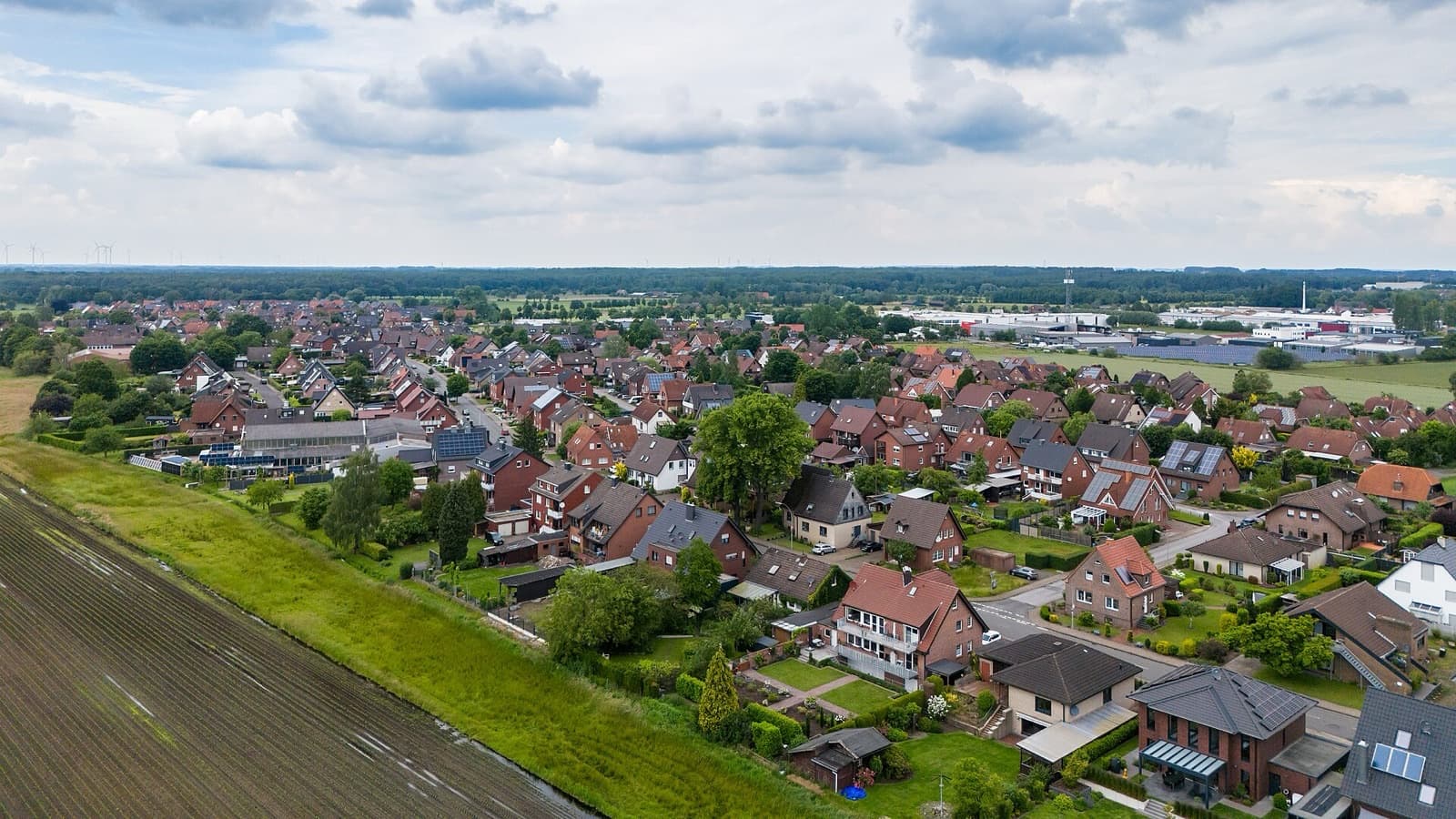
Photo: Dietmar Rabich, CC BY-SA 4.0.
Short answer: for some properties, clearly yes. For others, it is money spent on a photograph nobody needed. The difference is not the quality of the drone — it is whether the property has something worth seeing from above.
That is a less satisfying answer than the one the internet usually gives, so it is worth explaining where the confident version comes from.
The 68% statistic, and why to handle it carefully
If you have researched this at all, you have met this claim: listings with aerial photos sell 68% faster. It appears in agent newsletters, on drone companies' pricing pages, and in a great many blog posts.
Look closely and the number is quoted two different ways. Some sources say aerial listings sell 68% faster. Others say they are 68% more likely to sell. Those are not the same claim — one is about speed, the other about probability — and a figure that shifts between two different meanings as it travels is a figure that has been copied rather than checked. It is usually attributed to MLS data, sometimes by way of the National Association of Realtors, but the original study, its sample, and its methodology are not readily available anywhere.
We are not saying it is wrong. We are saying nobody quoting it appears to have read the source, and you should not spend money because of it.
There is also a selection problem that no correlation of this kind can escape. Listings that get aerial photography are not a random sample of listings. They skew toward larger properties, waterfront and acreage, higher price bands, and sellers working with agents who invest in marketing generally — professional interior photography, staging, floor plans, better copy. Those listings would likely outperform with or without a drone. Untangling the drone's specific contribution from everything else those sellers did is exactly what the quoted statistic does not do.
Where aerial photography genuinely earns its cost
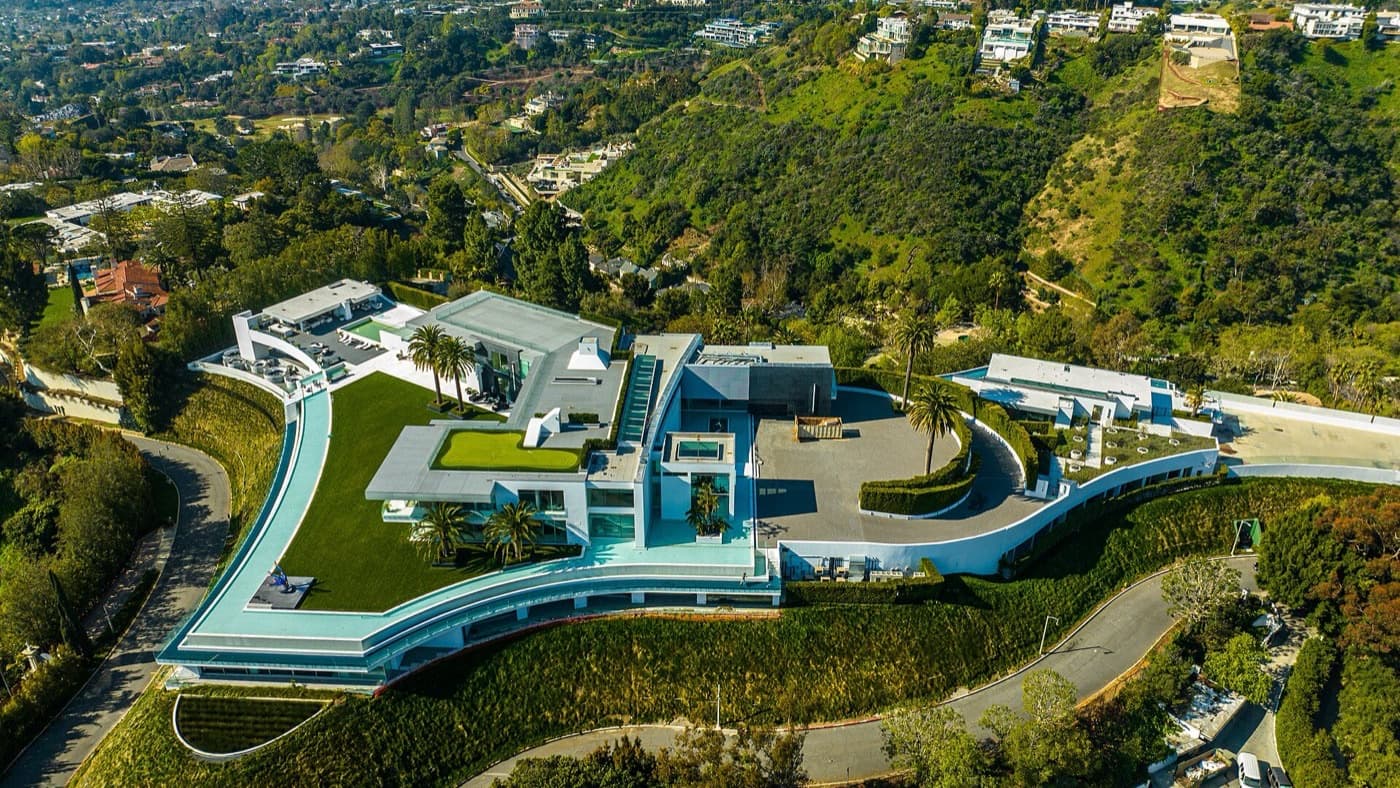
Strip out the hype and a clear pattern remains. Aerial imagery adds real information — not just a nicer picture — when the property has something a ground-level camera physically cannot capture:
- Acreage and land. Boundaries, topography and the relationship between buildings are invisible from the driveway. This is the strongest case there is; on rural land, aerials are arguably the primary photograph.
- Waterfront, views and setting. If the reason to buy is what surrounds the house, a ground camera cannot show the reason to buy.
- Large or complex buildings. Multi-wing homes, compounds, and anything where the layout is hard to read from eye level.
- Proximity to something desirable. A golf course, a park, a beach, a marina. "Backs onto" is a claim; an aerial is proof.
- Commercial and development sites. Parking, access, site lines and adjacency are the substance of the listing.
And where it usually does not:
- Standard suburban homes on standard lots, where the aerial shows a roof, a lawn, and the neighbours' roofs. Buyers already know what a suburban street looks like.
- Condos, apartments and anything above the ground floor, where there is no exterior to photograph that belongs to the unit.
- Properties whose surroundings are a liability — backing onto a motorway, a commercial yard, or an electricity substation. An aerial is an honest photograph, which is a genuine argument for taking one, but do not expect it to help the listing.
| Property | Worth an aerial? | Because |
|---|---|---|
| Acreage, land, rural | Yes — often the primary photo | Boundaries and topography are invisible from the ground |
| Waterfront or a view | Yes | The reason to buy is what surrounds the house |
| Large or multi-wing house | Yes | The layout cannot be read at eye level |
| Backs onto a park, golf course, beach | Yes | Turns a claim in the copy into proof |
| Commercial or development site | Yes | Access, parking and adjacency are the substance |
| Standard suburban house, standard lot | Rarely | The shot is a roof, a lawn and the neighbours |
| Condo or apartment | No | No exterior belongs to the unit |
| Poor surroundings | No | An honest photograph, but not a selling one |
The useful question is not "will this sell the house faster." It is "is there something about this property that a buyer needs to see from above in order to understand it." If you cannot name that thing, the shoot is decoration.
What it costs in 2026
| Package | Typical price | What you get |
|---|---|---|
| Aerial stills only | $150 – $350 | A set of edited exterior images, usually 8–15 |
| Stills plus a short cut video | $250 – $550 | The above plus a 30–90 second edit |
| Premium aerial video package | $400 – $750 | Longer film, colour grade, licensed music |
| Acreage, luxury or commercial | $400 – $1,200+ | Larger area, twilight shoot, more deliverables |
Those figures match what we see on our own marketplace: across the 16 quotes submitted on real estate listings posted to SkyLog, pilots have bid between $100 and $500, with a median of $250. A small sample, but it sits squarely inside the published ranges rather than contradicting them.
Against a typical commission, that is a small line item — which is precisely why it gets bought reflexively on properties that do not need it. The cost is rarely the problem. Buying it without a reason is.
What to ask for if you do commission a shoot
Sellers and agents consistently under-brief this, then wonder why the images feel generic. Three things make the difference:
Name the shot you actually need. "Aerial photos" gets you a drone hovering over the roof. "I need the shot that shows the lot running down to the creek" gets you the photograph that sells the property. If you identified the reason to shoot from above, put that reason in the brief.
Settle the deliverables in writing. How many finished stills, whether there is video and how long, turnaround time, revision rounds, and who holds usage rights for the marketing you plan to run — MLS, a brochure, a franchise portal, paid social. Licensing for a specific use is common; outright copyright transfer is not the default.
Give a date range, not a date. Drone work is weather-bound, and overcast light flattens exactly the depth you are paying for. A pilot who can move by 24 hours will quote lower than one boxed into a fixed slot. Agree a fallback date when you book rather than leaving it open.
Also confirm the pilot holds an FAA Part 107 remote pilot certificate. Shooting a listing for money is commercial flight, and it legally requires one. You can ask for the certificate number.
The honest summary
Aerial photography is a strong tool with a weak evidence base behind its most popular claim. Use the property to decide, not the statistic. If the land, the setting, the scale or the surroundings are part of what a buyer is paying for, an aerial is not decoration — it is the photograph that explains the property. If they are not, spend the money on better interior photography instead, which applies to every listing you will ever take.
If you do want it, it is worth getting more than one quote. Pricing on the same property varies more than most sellers expect, and what is included varies even more — the cheapest quote is sometimes raw images with no edit, which is a different product at a different price.
You can post a listing shoot on SkyLog for free and let Part 107 pilots quote it. There is no commission and no obligation to hire — the point is simply to see real numbers for your property rather than an average of everyone else's.
Related reading: what it costs to hire a drone pilot for any job and what to check before you hire one.
Get quotes from Part 107 pilots
Describe the job, and licensed pilots near you send prices. Posting is free, there is no commission, and you are never obliged to hire.
Post your drone job — free