How Much Does a Drone Roof Inspection Cost?
Typical 2026 prices by roof type, how a drone inspection compares with climbing up or buying satellite imagery, what thermal adds, and the damage a drone genuinely cannot find.
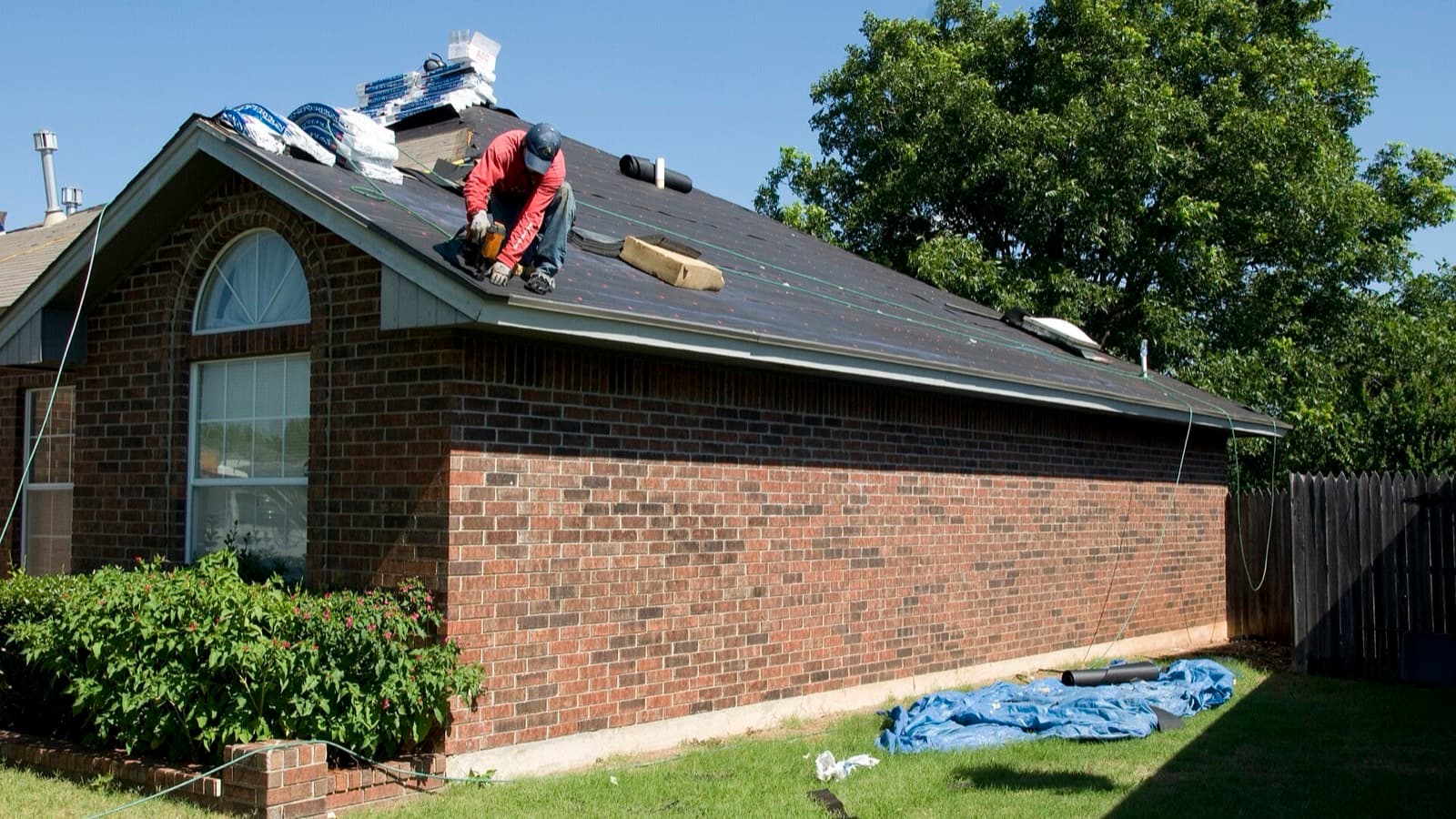
Photo: Patsy Lynch / FEMA, public domain.
A standard residential drone roof inspection costs $150 to $400 in 2026, with a typical figure around $375 for a straightforward visual survey delivered with photographs and a short written report. A thermal pass usually adds $100 to $200. Commercial and multi-building roofs start near $500 and climb from there.
That is the number. The rest of this is about when it is the right thing to buy, because a drone inspection is genuinely better than the alternative for some roofs and genuinely worse for others.
What it costs, by roof
| Roof | Typical range | What sits behind the number |
|---|---|---|
| Single-storey residential, simple pitch | $150 – $250 | One short flight, edited stills, brief findings |
| Two-storey, complex or steep pitch | $250 – $400 | More flight lines, more elevation, closer detail passes |
| Tile, slate or metal | $300 – $450 | High-resolution detail work; these surfaces damage easily underfoot |
| Add: radiometric thermal pass | +$100 – $200 | Separate payload, separate training, separate analysis |
| Add: formal written report with annotations | +$75 – $200 | Often the largest labour line in the whole job |
| Small commercial / flat roof | $500 – $900 | Larger area, drainage and membrane detail, longer report |
| Multi-building or industrial | $1,000 – $5,000+ | Priced per building or per programme, not per flight |
On our own marketplace, quotes submitted on inspection jobs have ranged from $100 to $1,550 with a median of $300 across 13 quotes. That is a small sample and we would not build a price index from it — but the shape is informative. The spread is not pilots disagreeing about the rate. It is "inspection" covering a single garage roof at one end and a multi-structure site at the other.
Drone, ladder, or satellite?
Three ways to look at a roof you cannot see from the ground, and they are not interchangeable.
| Drone inspection | Physical inspection | Satellite / aerial imagery | |
|---|---|---|---|
| Typical cost | $150 – $400 | $0 – $300 (often free with a repair quote) | $20 – $100, sometimes free |
| Resolution | Millimetre-scale on close passes | Whatever the eye and hand can reach | Roughly 15–30 cm per pixel |
| Finds cracked or lifted shingles | Yes | Yes | No |
| Finds soft or rotten decking | No | Yes, by feel underfoot | No |
| Can lift a shingle to check the seal | No | Yes | No |
| Inspects flashing, valleys, penetrations | Yes, visually | Yes, and by touch | No |
| Works on a steep, tile or storm-damaged roof | Yes | Risky, sometimes refused | Yes |
| Risk to a person | None | Falls are the significant one | None |
| Turnaround | Same day to 72 hours | Same day | Minutes, but the image may be months old |
The honest reading of that table: satellite imagery answers "is there obvious large-scale damage", a drone answers "what is the condition of this surface", and a person on the roof answers "how sound is this structure". They are three different questions, and people asking the third one are sometimes sold the second.
What a drone finds well
- Surface condition across the whole roof, including the slopes and ridges nobody walks.
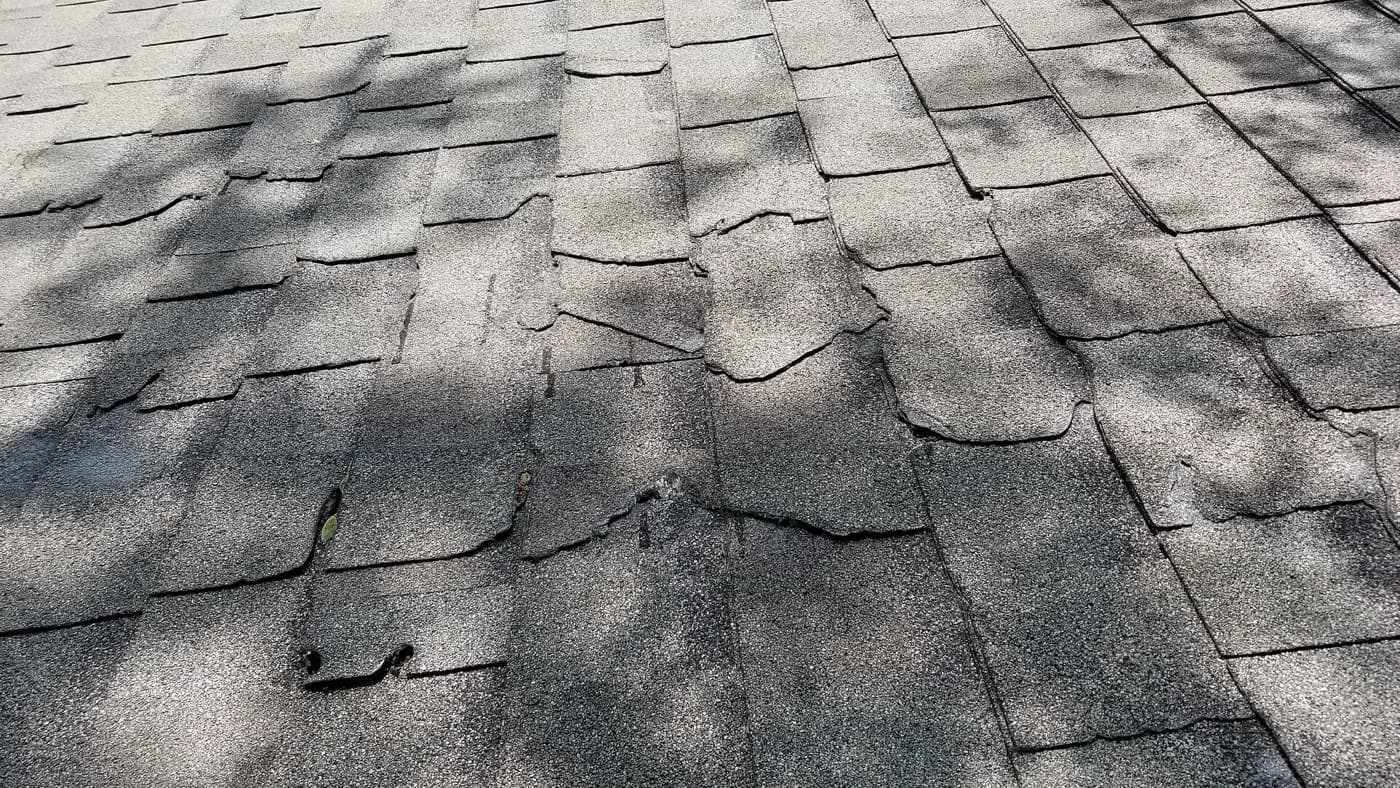
- Lifted, cracked, curling or missing shingles and tiles, and granule loss in the gutters.
- Flashing, valleys, chimneys, vents and skylights — the penetrations where most leaks begin.
- Storm and hail impact patterns, which read much more clearly from directly above than from an angle.
- Debris, ponding and blocked drainage on flat and low-slope roofs.
- Change over time, if you fly the same roof annually. Two dated image sets are a far stronger argument to an insurer or a buyer than one.
What a drone genuinely cannot do
This is the part most pages selling drone inspections leave out.
A drone photographs a surface. It cannot press on decking to find soft spots, lift a shingle to check whether the seal strip has failed, probe suspect flashing, or look into the attic — and attic inspection is how a great many active leaks are actually traced, because the evidence is on the underside. It cannot tell you what is underneath a roof that looks fine from above.
It also cannot fly in meaningful rain or high wind, which is occasionally inconvenient precisely when you most want to know.
So: if you want documented surface condition, a drone is excellent and safe. If you suspect structural or moisture damage below the covering, budget for someone to go up or into the attic as well. A pilot who tells you a drone replaces that entirely is overselling.
Is thermal worth the extra?
A radiometric thermal camera detects temperature differences, and trapped moisture holds heat differently from dry material. Flown correctly — usually at dusk, as the roof gives up the day's heat — it can reveal saturated insulation under a membrane that looks perfectly sound in visible light.
It is worth paying for when:
- The roof is flat or low-slope with a membrane, where water tracks sideways and the stain inside is nowhere near the breach.
- You have an active leak you cannot locate.
- You are buying a commercial building and want to know what the roof is hiding.
It is usually not worth it on a simple pitched asphalt roof with visible damage, where the visual pass already tells you what you need and thermal mostly adds cost. Ask whether the camera is genuinely radiometric — the cheaper thermal cameras produce pretty pictures without calibrated temperature data, and the analysis is what you are paying for.
If this is for an insurance claim
Drone imagery is widely accepted as supporting documentation for a claim, and a dated, geotagged set of images taken shortly after a storm is a materially stronger position than a description. It does not usually replace the carrier's own inspection — most insurers send their own adjuster regardless — and no photograph settles a claim on its own.
Two practical points. Get the images before any tarping or emergency repair, because that work changes the evidence. And make sure the file metadata with dates and coordinates survives delivery; ask for originals alongside anything edited.
What you should receive
Settle this before booking, because it is where cheap quotes turn out to be cheap:
- How many images, and at what resolution.
- Whether there is a written report, and whether findings are annotated on the images themselves.
- Whether the whole roof is covered — every slope, plus the penetrations, not a handful of hero shots.
- Turnaround time, and what happens if the weather moves the flight.
- Who may use the images. If they are going to an insurer, a buyer or a contractor, say so up front.
- Part 107 certificate and insurance. Commercial flight requires the certificate; ask for the number and for a certificate of insurance if the site is not your own home.
The short version
Budget $150 to $400 for a residential drone roof inspection, $375 as a reasonable single guess, and $100 to $200 more if you want thermal. Expect to pay more for the report than for the flight, because that is where the work is.
And use it for what it is good at. A drone is the best available way to document the condition of a roof surface without putting a person on it. It is not a substitute for someone who can press on the decking.
To get real numbers for your own roof rather than a national range, post the job on SkyLog for free — licensed pilots near you send prices, there is no commission, and you are under no obligation to hire.
Related reading: what it costs to hire a drone pilot for any job and what to check before you hire one.
Get quotes from Part 107 pilots
Describe the job, and licensed pilots near you send prices. Posting is free, there is no commission, and you are never obliged to hire.
Post your drone job — free