Farm and Ranch Listing Photos in 2027: The Drone Shot List
Farm and ranch buyers are buying a working operation. The aerial shots that show fences, water, pasture, fields and buildings the way a buyer will judge them, when to fly, and how to work around livestock.
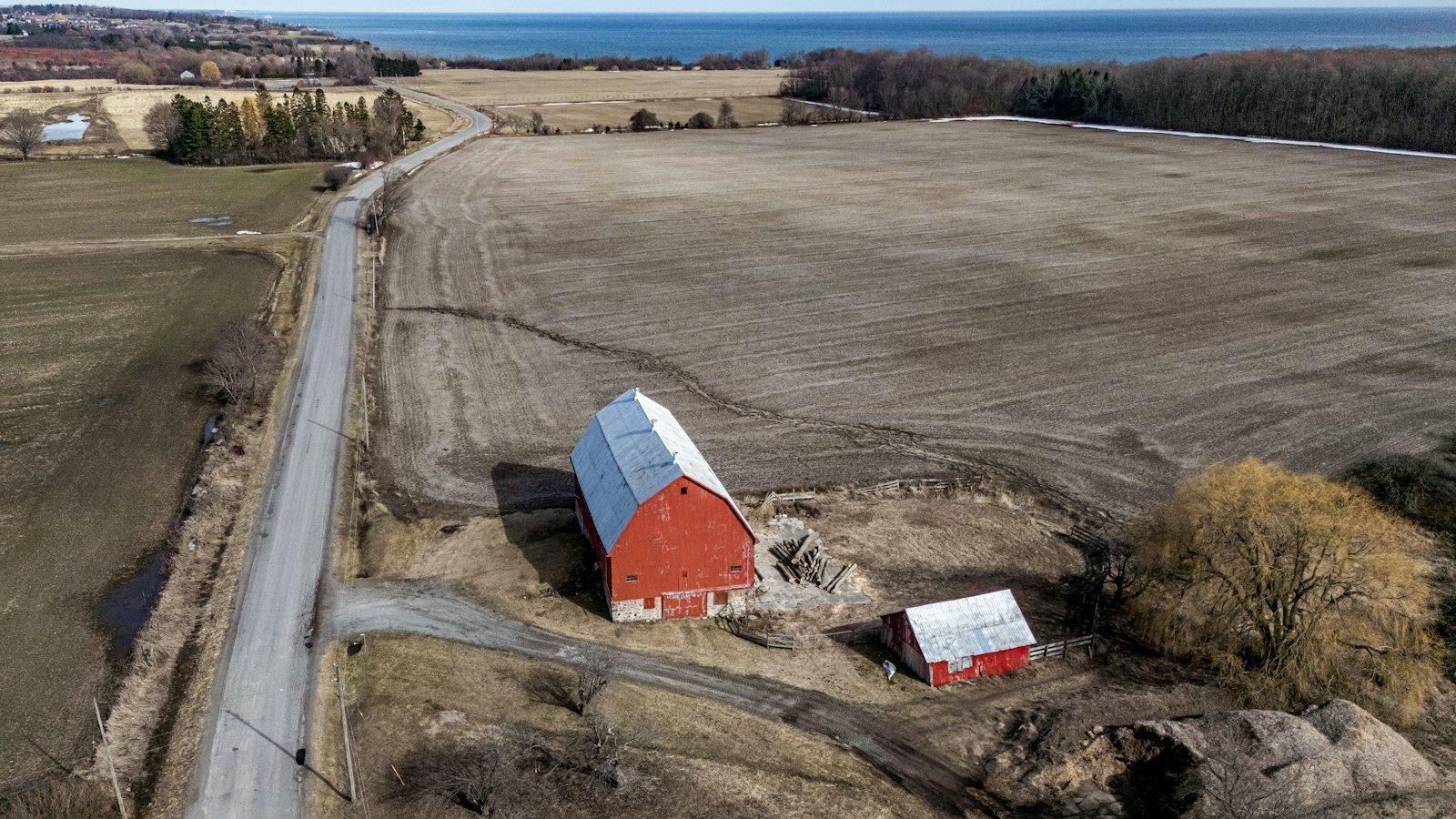
Photo: chris robert / Unsplash, Unsplash License.
A farm or ranch buyer is not just buying land and a house. They're buying an operation: fences that hold stock, water that doesn't run dry, fields that drain, barns that work. They'll judge every one of those, and most of them are hard to see from a pickup at the gate.
The drone is the only practical way to show a working property as a whole. Here's what to shoot and when.
The shot list
The headquarters
House, barns, shop, pens, grain bins and yard in one oblique frame. It's the photo buyers come back to, and it shows how the place is laid out and kept.
The whole property
A high overview with an approximate boundary, showing the layout of pastures, fields, timber and water. On a large ranch this may take several shots or a stitched map.
Fences and cross-fencing
Perimeter and interior fences, pens and alleys. Rotational grazing setups are a selling point worth showing clearly.
Water
Ponds, tanks, creeks, troughs, wells, windmills and pipelines. On a ranch, water often decides the price.
Pasture and hay ground
Shot green, to show stand and condition. Include hay meadows, and any pivot or irrigated ground.
Crop ground
Field layout, field roads, waterways and terraces. Irrigation pivots photograph beautifully from above, and their circles tell a buyer a lot at a glance.
Buildings up close
A low pass over each major building, roofs included. Condition matters, and buyers will ask.
Access and roads
The entrance, county road frontage, internal roads and where trucks and trailers turn.
When to fly
| Property | Best timing |
|---|---|
| Pasture and hay ground | Spring to early summer, when grass is green and growing |
| Row crops | After emergence for green rows, or after harvest when field layout and drainage matter more |
| Orchards and vineyards | In leaf, or in bloom for a standout hero shot |
| Ranches in dry country | After rain, when the range greens up, if the timing works |
| Timber and terrain | Leaf-off, late autumn to early spring |
If the listing has to go out in the wrong season, shoot it anyway and be honest about it. Winter-dormant pasture is fine if you say so. If the listing is still live when things green up, a second visit to reshoot the hero shot is cheap compared to the property.
Working around livestock
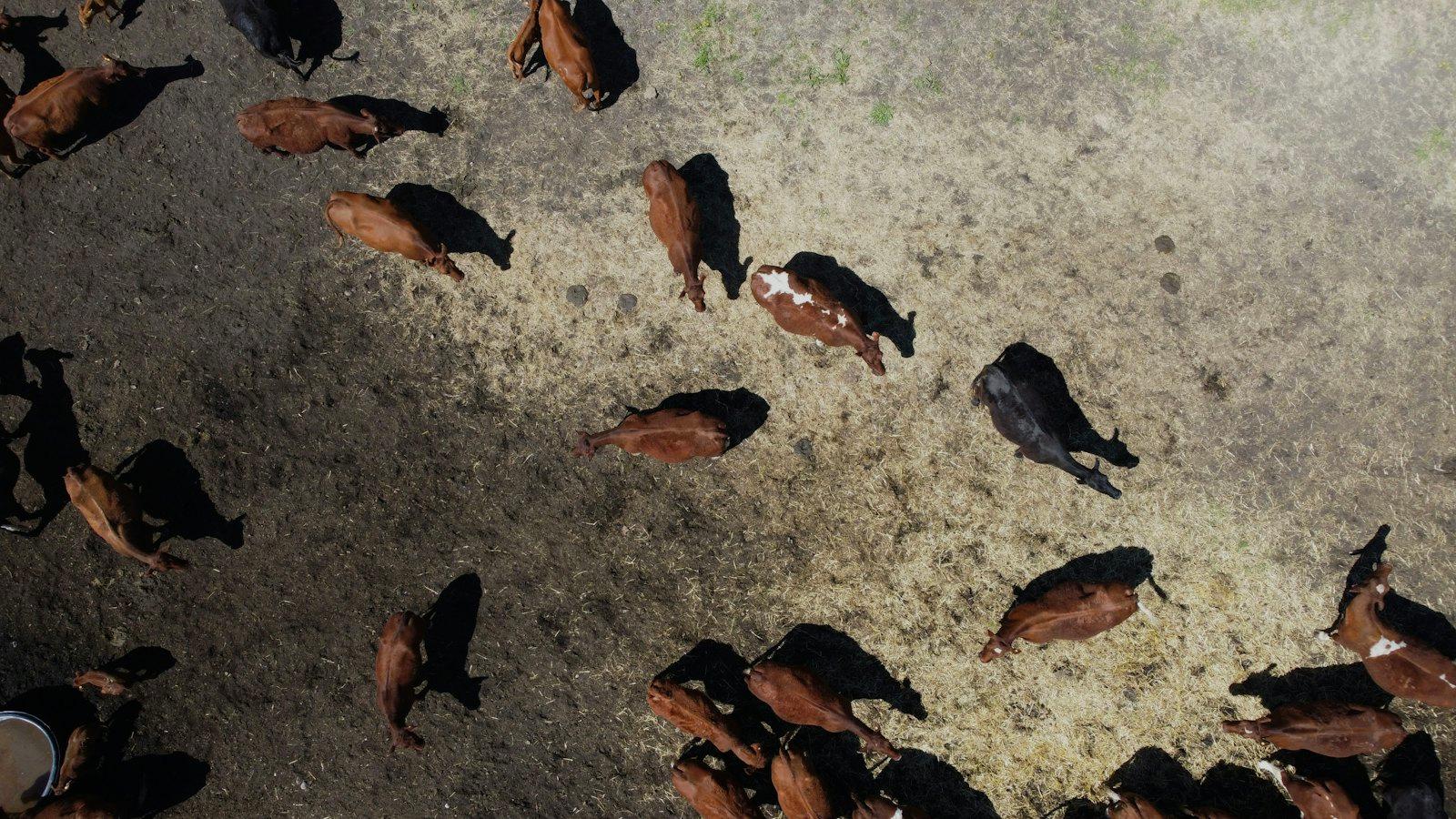
Most livestock gets used to a drone flying at a sensible height, but a low drone can bunch or scatter cattle and spook horses. Give the pilot the details in advance:
- Which pastures have stock in them on the day
- Any horses, bulls, calving or recently weaned animals
- Whether stock can be moved out of the main shots
- Gates the pilot will need to open, and who has the keys
A pilot who knows this will plan the flight lines and heights around the animals rather than finding out in the air.
Show it as it is
From the air, every rusty roof, sagging fence and washed-out road is plain to see. That's useful: buyers trust a listing that shows the real condition, and a farm buyer will see it all on the first visit anyway. Fix what's cheap to fix before the shoot, such as debris, scrap piles and dead equipment in the yard, and let the price speak for the rest.
The same honesty applies to boundaries and acreage. Use the deeded acreage and label any drawn boundary as approximate. How to add property lines to drone photos covers it in detail.
Video for farms and ranches
A short video works well for working properties, because it shows how the pieces fit together: the road in, the headquarters, then out across pasture to the water and back. Keep it to two minutes, caption key features, and keep an unbranded version for the MLS.
What it costs
A farm or ranch shoot usually costs more than a house, because there's more ground and more to cover. On SkyLog, land and acreage listings priced at $150 to $350, typically $250, for a standard parcel. A large ranch with several areas, multiple buildings, video and a stitched overview map will run higher. The clearer the shot list, the more accurate the price.
Post your farm or ranch shoot free on SkyLog with the shot list and the livestock details, and get a price from a Part 107 pilot. There's no commission on either side.
Get a price from a Part 107 pilot
Describe the job once. Licensed pilots near you see it and can send you a price. Posting is free, there is no commission, and you are never obliged to hire.
Publish your job, get a priceKeep reading
 Real estate
Waterfront Listing Photos in 2027: The Aerial Shots That Show What Buyers Pay For
7 min read
 Land
Selling Land to Out-of-State Buyers in 2027: How to Show a Parcel From 1,000 Miles Away
7 min read
 Real estate
Relisting an Expired Listing in 2027: Why New Photos, Including Aerials, Are the Reset
6 min read