DJI Matrice 5T: 1K Thermal, 59 Minutes, and the Catch for US Pilots
DJI launched the Matrice 5T on November 5, 2026: a folding enterprise drone with native 1280×1024 thermal, LiDAR and radar obstacle sensing, IP55 and up to 59 minutes in the air. Here is what is new, how it compares with the Matrice 4T, what it costs, and why US pilots can't simply order one.
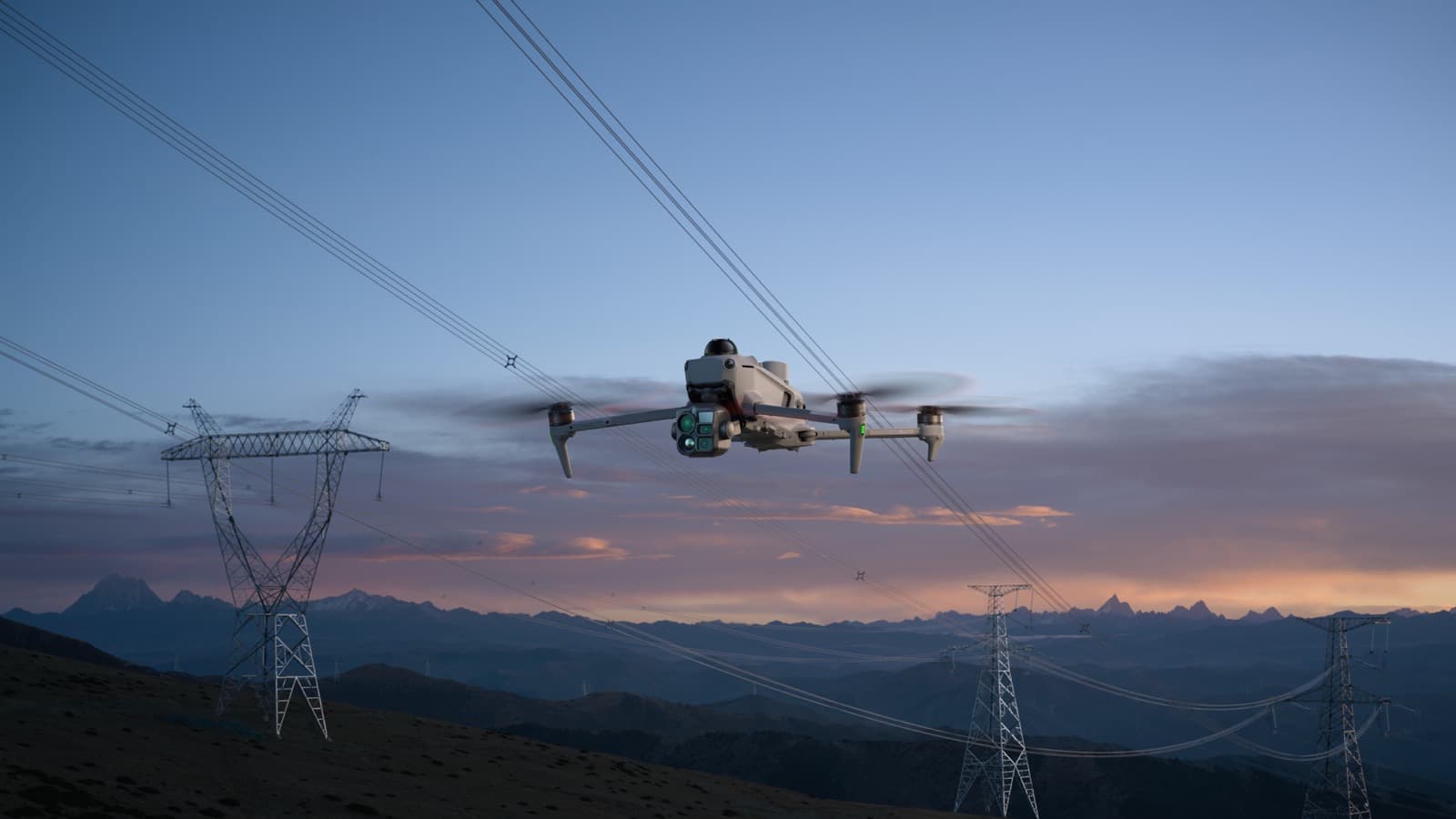
Photo: DJI.
DJI announced the Matrice 5T on November 5, 2026. It is the new compact flagship of its enterprise line: a folding drone with a native 1K thermal camera, three 50 MP visible cameras, LiDAR and radar obstacle sensing, an IP55 rating and up to 59 minutes of flight. On paper it is the most capable drone you can fit in a one-hand case.
For pilots in the United States there is a catch, and it matters more than any spec on the sheet. We'll get to it after the hardware.
- native thermal resolution, with a 2560×2048 UHR mode at 30 fps
- 1280×1024
- max flight time in no wind (54 min hovering), from a 215 Wh battery
- 59 min
- rated for rain and dust, from -20° to 50° C
- IP55
- laser rangefinder reach, for pinpointing and measuring from the air
- 3 km
What is new on the Matrice 5T
Four cameras and a laser in one gimbal
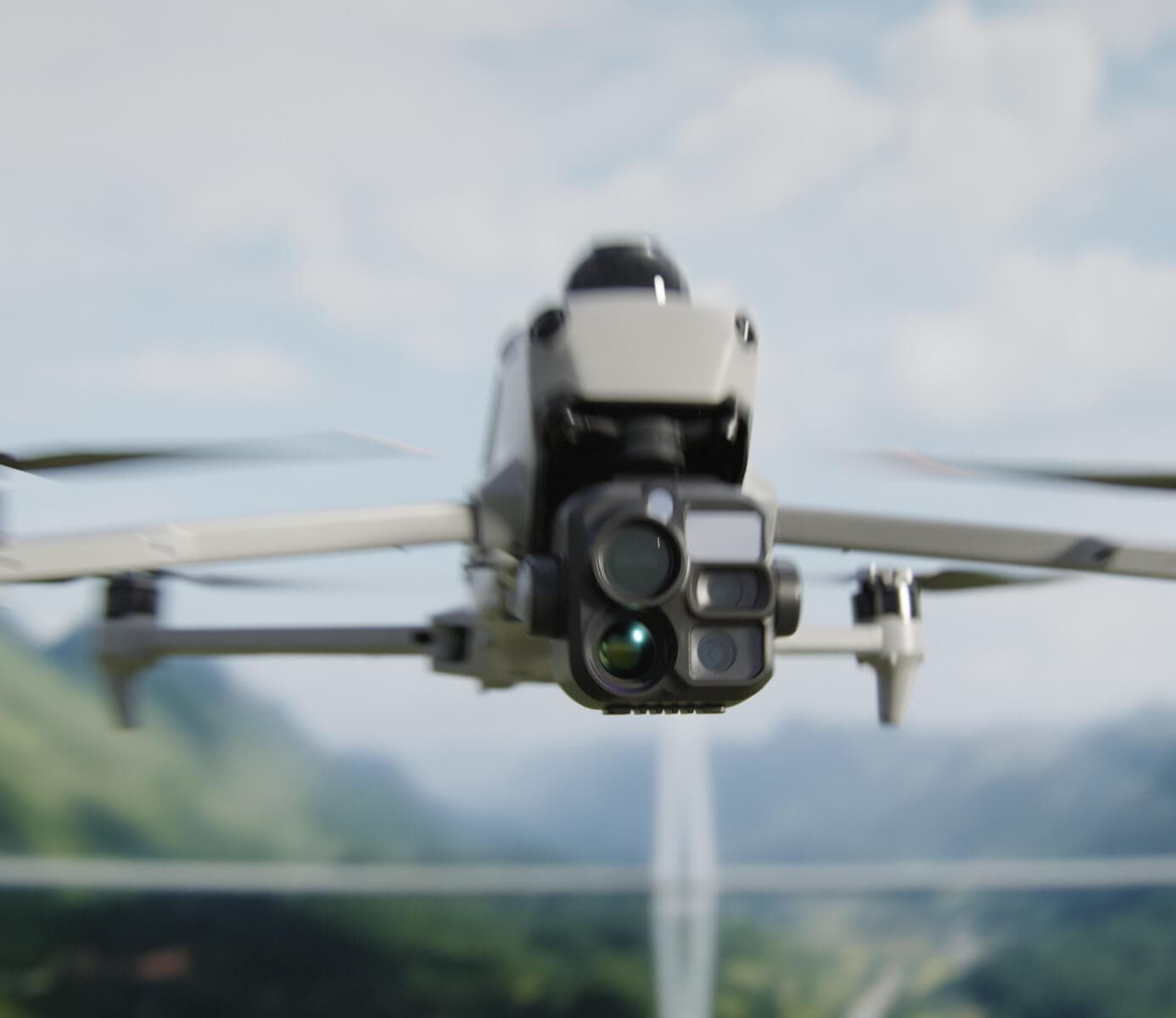
The gimbal packs six sensors. According to DJI's spec sheet:
- Wide: 1/0.98-inch 50 MP sensor, 23.5 mm equivalent, f/1.8. With Night Scene mode the ISO goes up to 1,638,400, and DJI says it keeps full colour down to 0.01 lux.
- Medium telephoto: 1/1.28-inch 50 MP, 70 mm equivalent (3× optical). DJI's example is spotting pins and cracks on a power line or bridge from 10 m away.
- Telephoto: 1/1.5-inch 50 MP, 252 mm equivalent, with 176× hybrid zoom. DJI says it reads a licence plate from up to 400 m.
- Laser rangefinder: up to 3,000 m, eye-safe Class 1. It lets you drop a pin, draw a line or measure an area straight from the live view.
- NIR auxiliary light: about 100 m of infrared illumination for the telephoto's monochrome night mode.
One thing to know before you plan creative work with it: video tops out at 4K at 30 fps in H.265 at 40 Mbps. This is an inspection and public-safety camera, not a cinema camera.
The thermal camera is the headline
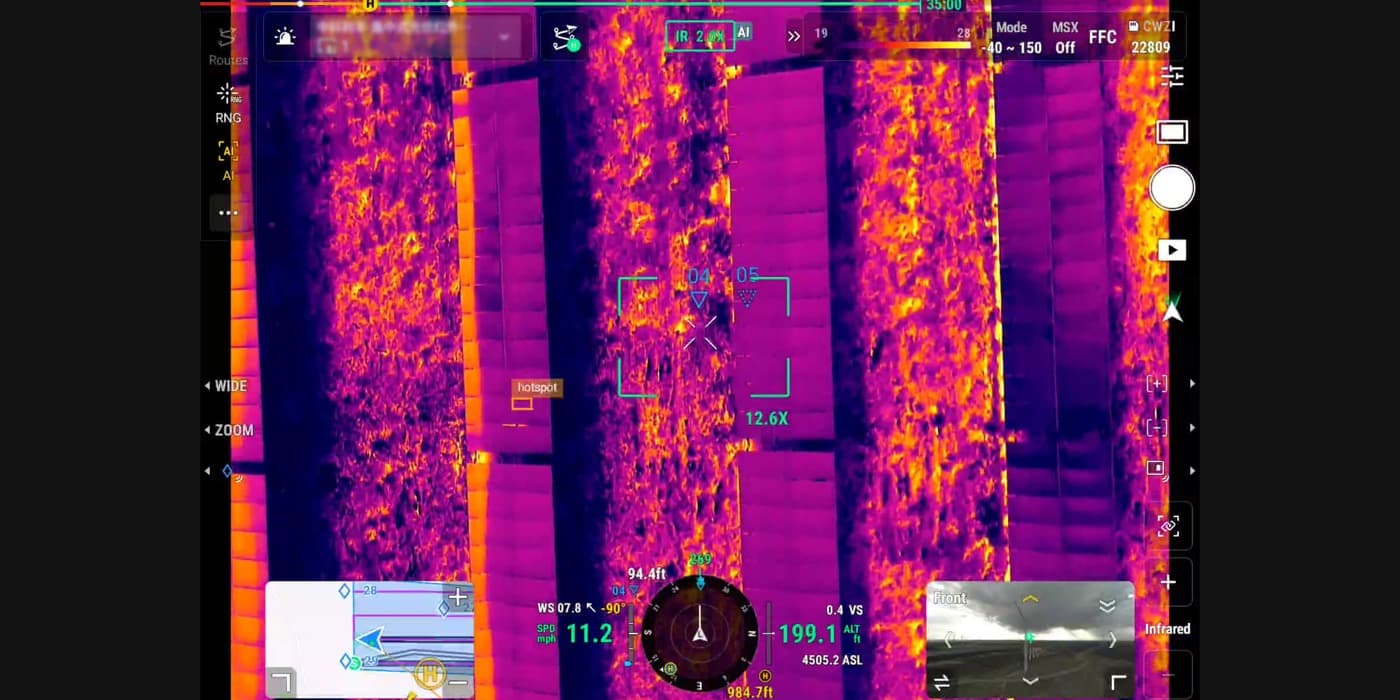
The thermal core is an uncooled VOx sensor at a native 1280×1024 with an 8 μm pixel pitch, sensitivity of ≤50 mK and a 53 mm-equivalent lens. Most thermal drones in this class, the Matrice 4T included, are natively 640×512. Four times the pixels means you can fly higher or further from the asset and still resolve a single hot cell, a failed connector or a wet patch on a flat roof.
Its two measurement ranges are -20° to 150° C (±2° C or ±2%) and 0° to 550° C (±5° C or ±3%). Photos save as radiometric R-JPEG, so the temperatures travel with the file into DJI's DTAT 3.0 or your own reporting tool. The remote can also blend thermal over the visible image, with a dial to set the mix, so you can show a client exactly where the hot spot is on the real roof.
Built for night and bad weather
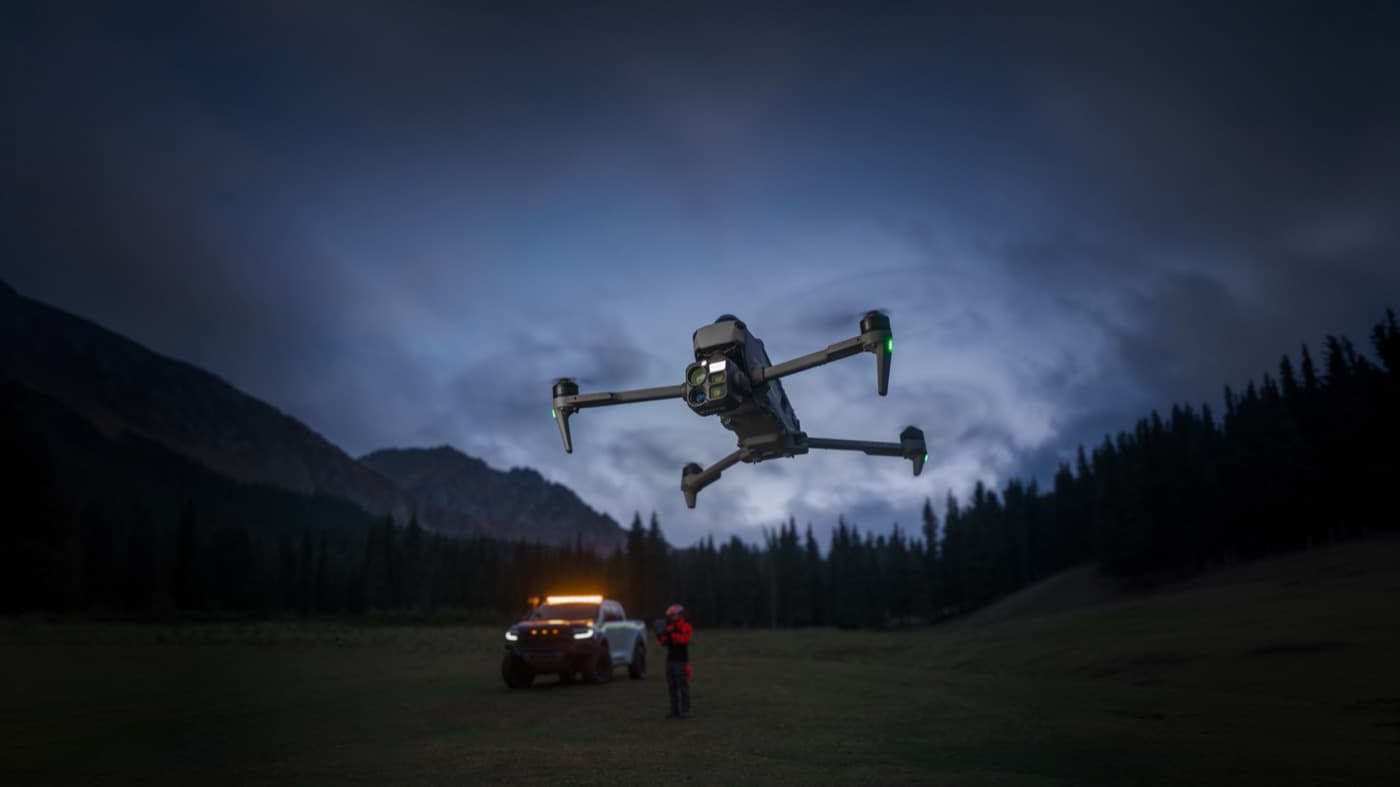
This is the first DJI compact enterprise drone with LiDAR, mmWave radar and omnidirectional vision together. The rotating LiDAR sees 360° horizontally and picks up a 21.6 mm power line at 32 m. The forward radar sees a 10 mm insulated wire at 40 m through fog, rain or dust. Six fisheye cameras keep visual positioning down to 0.5 lux. Below that, the LiDAR takes over obstacle detection.
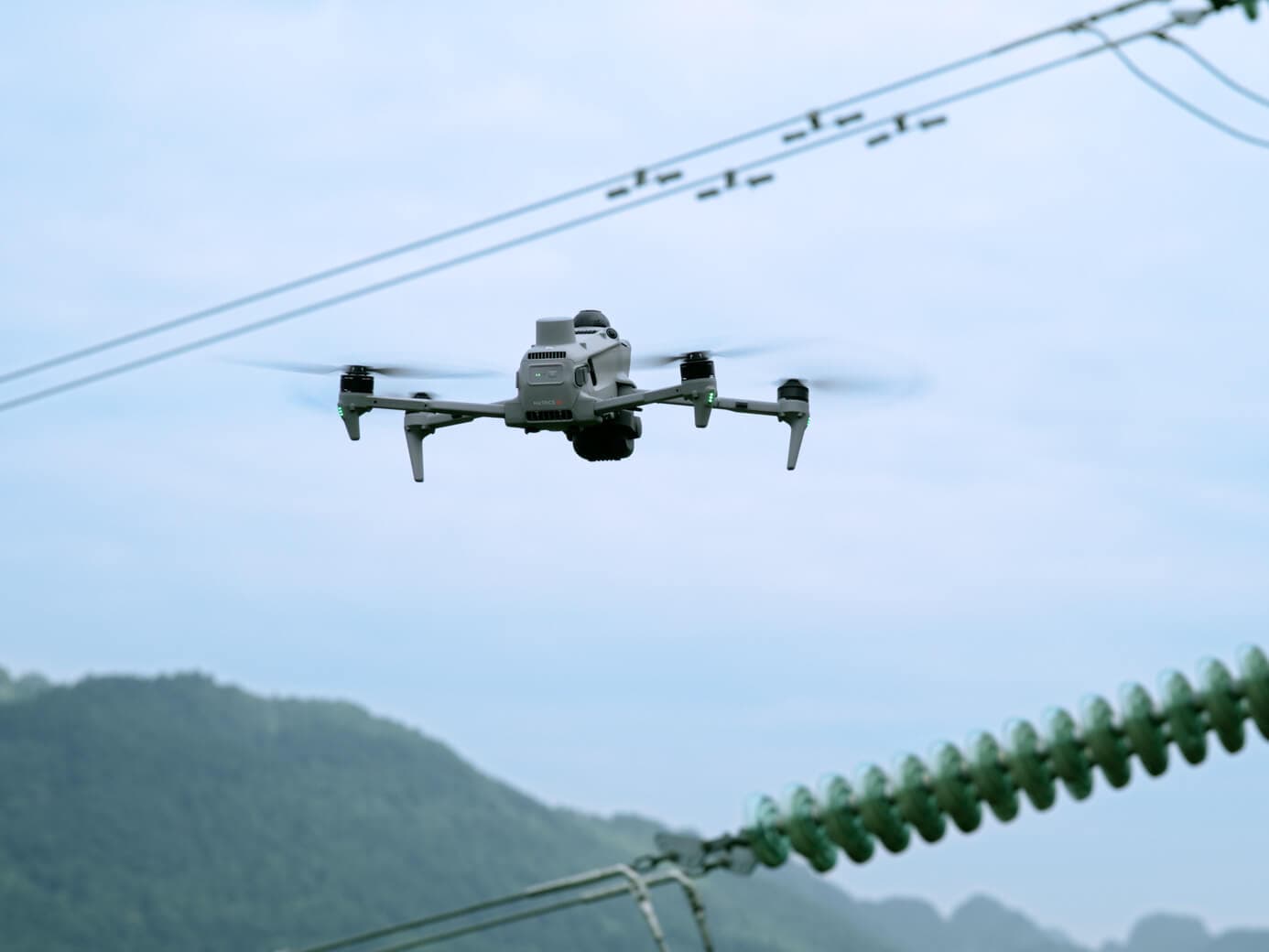
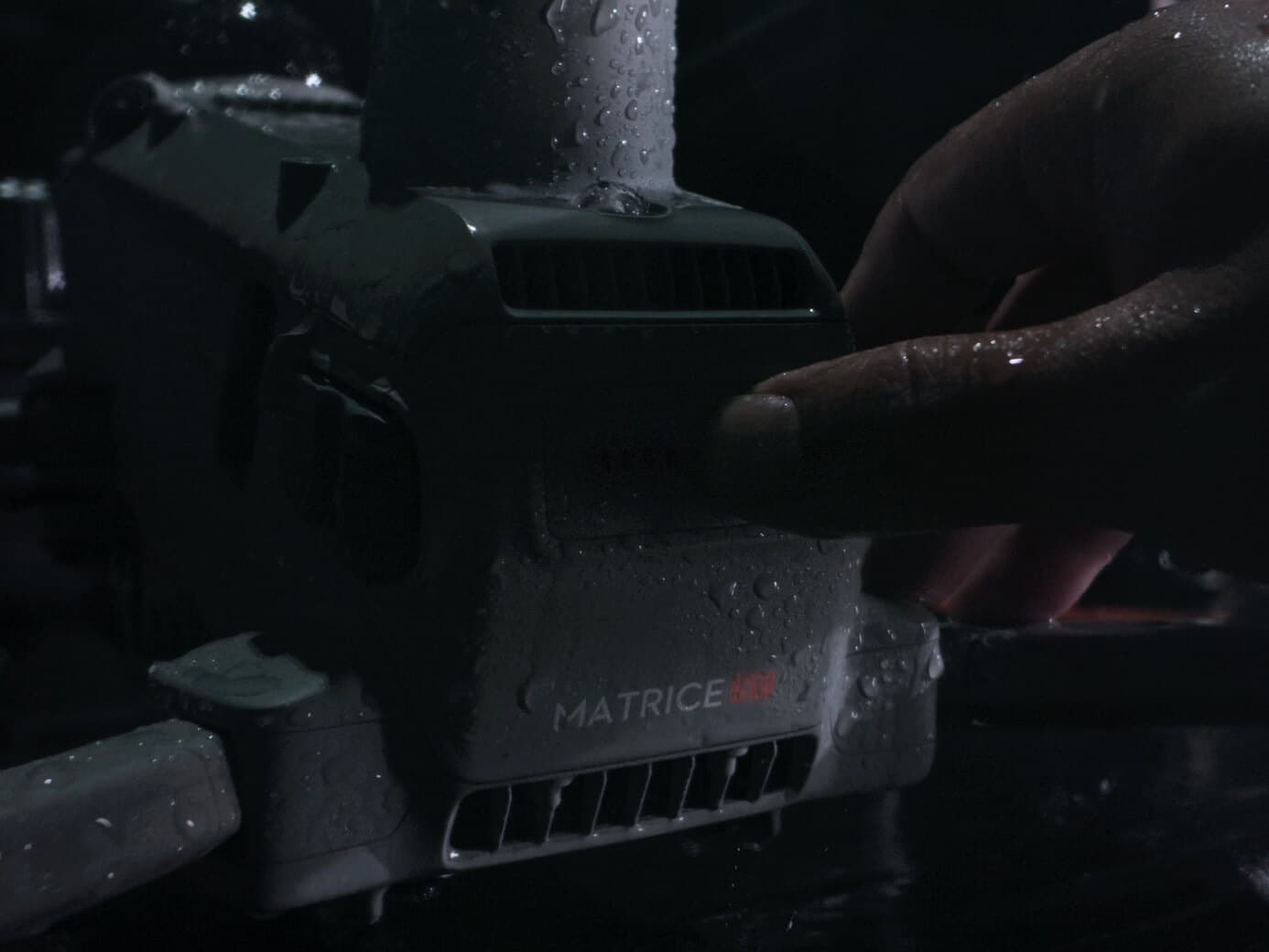
The airframe is rated IP55 and flies from -20° to 50° C (-4° to 122° F). It also has built-in ADS-B and Remote ID receivers to warn you about crewed aircraft and other drones nearby. For anyone flying near airports or alongside a medevac helicopter, that is a real safety upgrade.
Mapping without ground control points
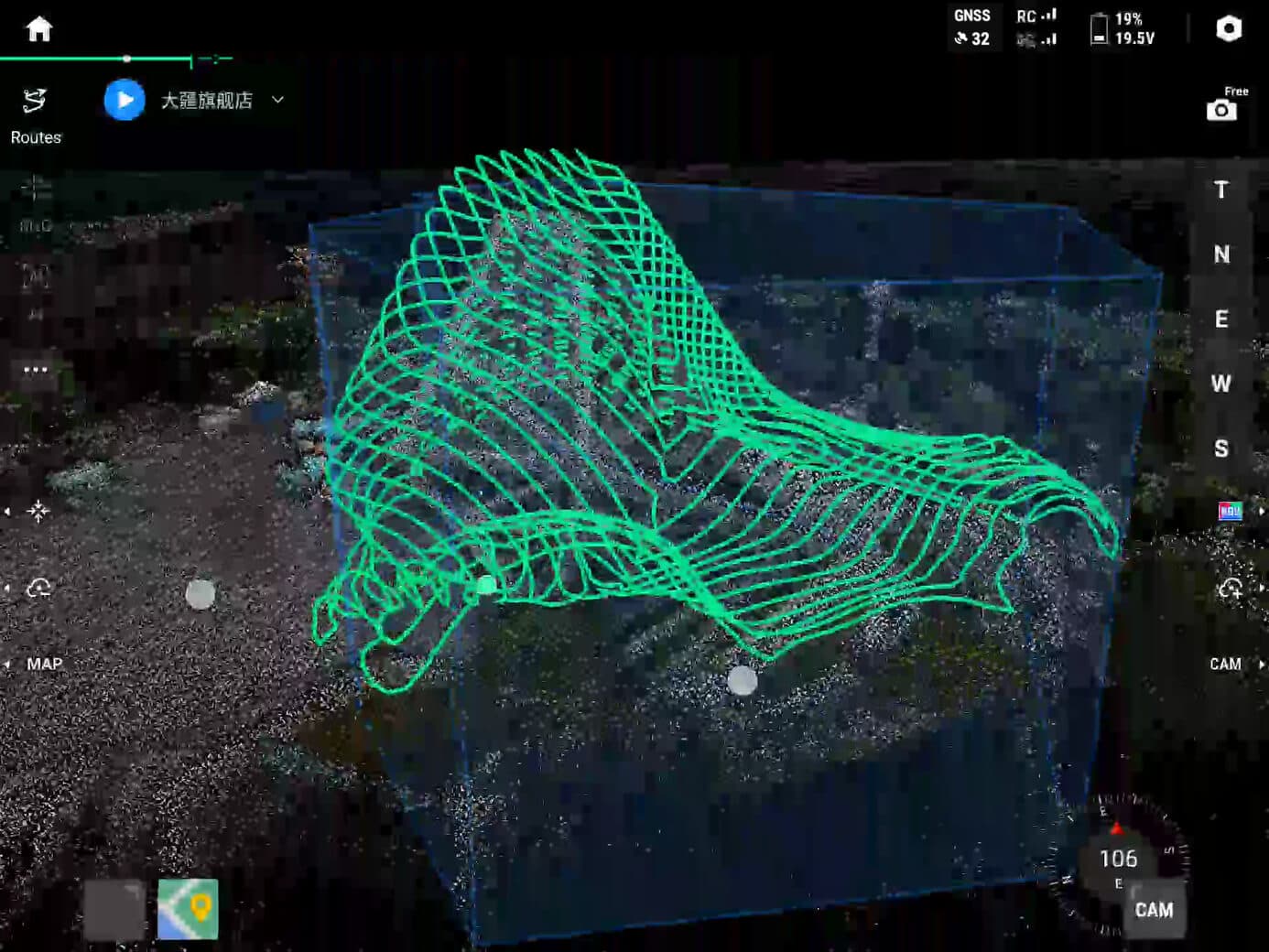
With RTK, DJI quotes 1 cm + 1 ppm horizontal accuracy. Paired with DJI Terra, it claims centimetre-level surveys with no ground control points, measured at 120 m with 12 MP images. The remote can build a rough point cloud or 2.5D model while you are still on site, and DJI says 200 photos process in about 8 minutes. That won't replace a full Terra or Pix4D run, but it tells you before you pack up whether you missed a face.
On-board AI and a smarter remote
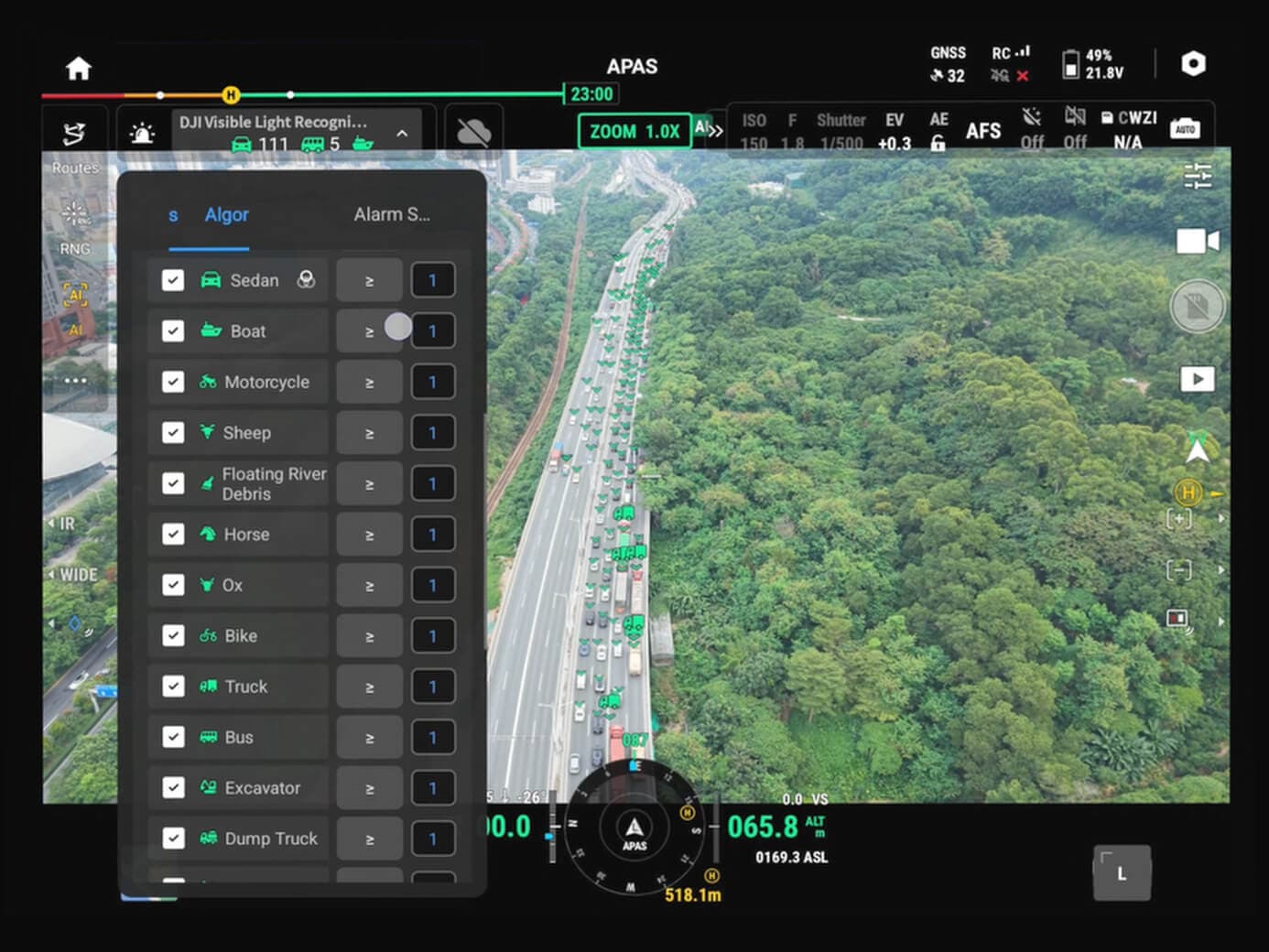
The on-board AI recognises over 20 target types and supports third-party models. You can also outline an area on the map and the drone plans its own patrol route, then compiles a report after the flight. Connected to FlightHub 2, you can search live footage with a text or image prompt. The new DJI RC Plus 3 Enterprise has a 7.44-inch, 2,000-nit screen and shows up to three feeds at once.
Range, relay and launching from a boat

O4 Enterprise Enhanced transmission reaches 40 km under Canada's IC standard and 20 km under Europe's CE. In dense city areas DJI's own figure is 1.5 to 6 km (IC). Two built-in 4G modules can take over when buildings block the radio link, and four relay modes let one drone extend the link for one or two others.
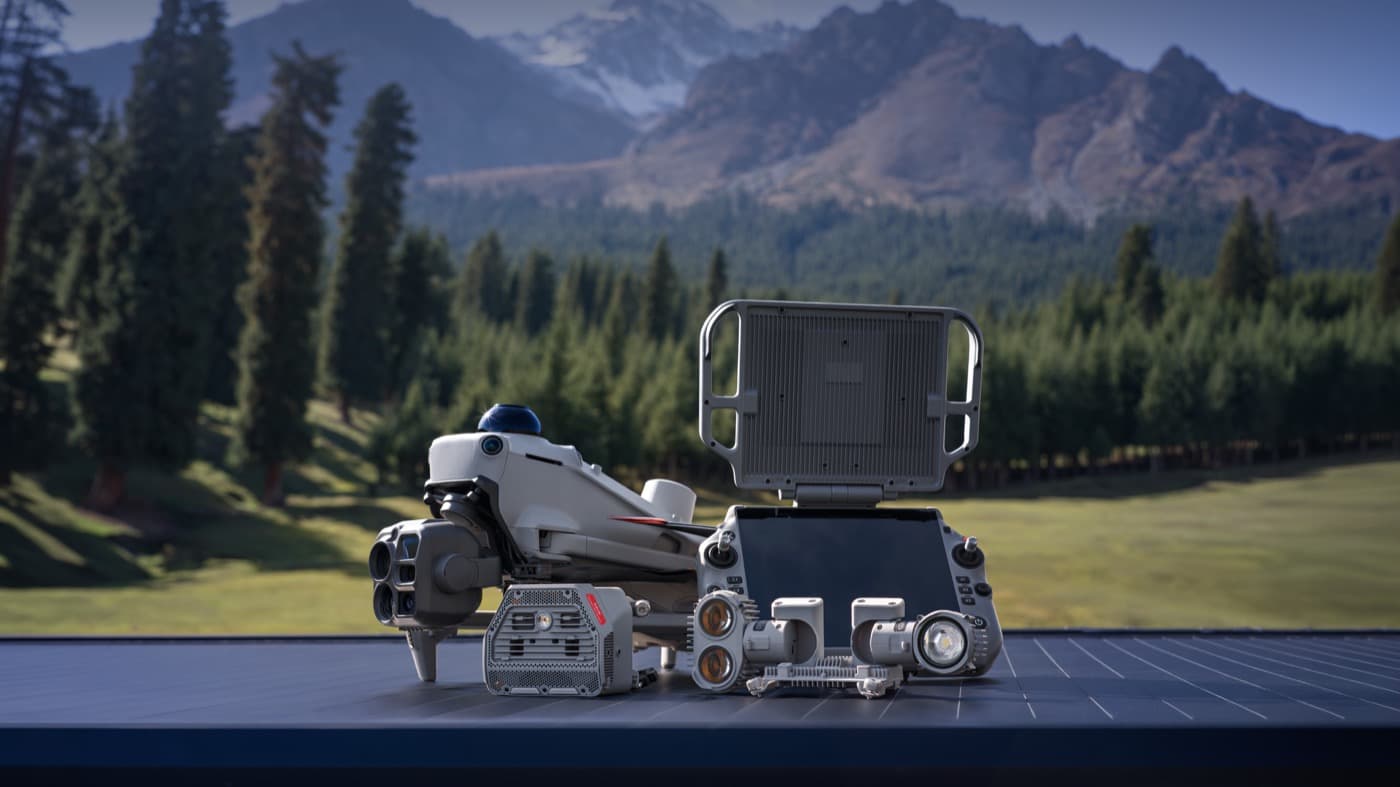
The 215 Wh battery weighs 768 g, self-heats for cold-weather charging and is rated for 200 cycles. The aircraft weighs 2,239 g, carries up to 400 g on three E-Ports and takes off in 10 seconds, according to DJI.
Matrice 5T vs Matrice 4T
The Matrice 4T is the drone most US thermal pilots know. Here is how they compare. The 5T figures are from DJI. The 4T figures and both UK prices are from DroneXL's launch comparison.
| Matrice 5T | Matrice 4T | |
|---|---|---|
| Thermal (native) | 1280×1024, 8 μm | 640×512, 12 μm |
| Longest telephoto | 252 mm equiv. | 168 mm equiv. |
| Max flight time | 59 min | 49 min |
| Weight with battery | 2,239 g | 1,219 g |
| Max transmission | 40 km (IC) | 25 km (FCC) |
| UK price at Heliguy, before VAT | about $1,900 more, battery extra | about $6,759, battery included |
| US status | Not listed, no FCC figures | Sold by US dealers |
The 5T is close to twice the weight of the 4T. It is a bigger aircraft, not a 4T with a better sensor, and its accessories don't fit the Matrice 4 series.
The catch: can you buy one in the US?
At launch, no US route was in sight. DJI's release says the drone is "available for purchase today from authorized DJI Enterprise dealers" and names no market. On launch morning, DroneXL found no listing at two major US enterprise dealers, and the spec sheet gives transmitter power for Canada, Europe, China and Japan, but not the FCC. DroneLife reports that the Matrice 5T is not on the FCC's published exemption list.
The background is the FCC's decision of December 22, 2025, which added foreign-made drones and their critical components to its Covered List. Drones authorized before then can still be sold and flown. A new model can't get FCC equipment authorization, and without it, it can't be marketed in the US. DJI is challenging the decision in court. A further proposal in FCC Docket 26-189 would target foreign drones with capabilities such as thermal imaging and LiDAR, the two things the 5T is built around. That proposal was not final at the time of writing.
Who should care
Worth watching if you
Fly solar, roof or building thermal and lose time flying low to get enough pixels on a 640×512 sensor.
Work utilities or towers, where LiDAR wire detection and the power-line mode cut real risk.
Do public safety or night work, where low-light positioning, full-colour night vision and ADS-B matter.
Fly outside the US, in Canada, the UK or the EU, where dealers are already taking orders.
Not the right tool if you
Shoot real estate or events, where 4K30 H.265 is a step down from a Mavic and the thermal camera earns nothing.
Need it in the US this season, since there is no authorized way to buy one yet.
Want a light kit, since at 2.2 kg it is a much bigger aircraft than the 4T.
What it costs
DJI has not published a price. The only firm public figure at launch is UK dealer Heliguy's pre-order listing at £7,568. DroneXL puts that at about $1,900 more than the Matrice 4T at the same dealer, before you add a battery. For context, the 4T was listed by US dealers at about $7,100 to $7,700 in October 2026.
If you price thermal work, a better sensor doesn't change what a client pays per job on its own. It changes how many jobs you can take: a larger solar array covered in one battery, a commercial roof read from a safe height, a night search with a usable picture. That is where an aircraft like this pays for itself, once you can legally fly one.
Sources
- DJI: Matrice 5T product page, full specs and launch announcement, November 5, 2026.
- DroneXL: DJI Matrice 5T Puts 1K Thermal in a Folding Drone the US Can't Buy, November 5, 2026.
- DroneLife: DJI Launches Matrice 5T with Advanced Thermal Imaging, AI, and Longer Flight Time, November 5, 2026.
- Heliguy: DJI Matrice 5 Series, listing checked November 6, 2026.
Run your drone business the easy way
Clients, jobs, flight logs, credentials, and invoices in one place. Start free — no credit card needed.
Get started free